


If you're thinking about an MBA, there are certain skills that separate the graduates who actually change their career trajectory from the ones who just add three letters to their LinkedIn headline: strategic thinking, sharp decision-making, the ability to negotiate a room, the discipline to run operations without everything falling apart, and the leadership instinct to hold a team together when things go wrong.
Here are 7 books we've shortlisted that carry the teachings of exactly these areas.
Each one pulled from a different corner of the MBA curriculum, from strategy to negotiation to operations to crisis leadership.
Together, they'll give you a taste of some of the key themes commonly explored in MBA study.
Think of this list as a microcosm of the larger subject matter — a fast, practical preview of the thinking tools a business school is actually trying to instill in you.
Let's dive in.
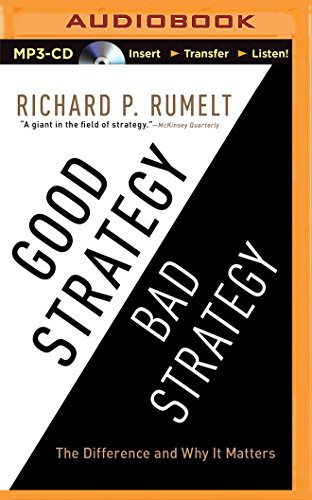
1. Good Strategy/Bad Strategy — Richard Rumelt
MBA discipline: Strategic Management
Most "strategies" are just goals wearing a strategy costume — a vision statement, a revenue target, a slogan.
Rumelt, a strategy professor who has advised organisations ranging from technology firms to governments, spends this book showing the difference between that kind of wishful thinking and a real strategy: one built on a diagnosis of the actual problem, a guiding policy, and a set of coherent actions.
It's one of the most accessible introductions to the core ideas of strategic management.
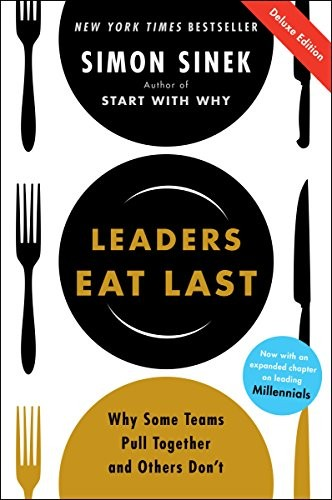
2. Leaders Eat Last — Simon Sinek
MBA discipline: Leadership & Organizational Behaviour
Every MBA has an organizational behaviour module, and this book is basically its most quotable chapter.
Sinek argues that trust, not authority, is what makes teams perform, and that leaders who protect their people (rather than their own position) build organizations that outlast any single quarter's numbers.
It's a useful counterweight to the more numbers-driven parts of an MBA.
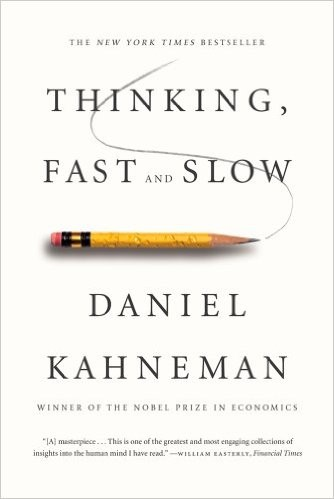
3. Thinking, Fast and Slow — Daniel Kahneman
MBA discipline: Decision-Making & Behavioural Economics
Nobel laureate Daniel Kahneman's account of the two systems that drive human judgement, one fast and intuitive, one slow and deliberate, is the intellectual backbone of every behavioural economics elective in an MBA program.
If you want to understand why smart people make bad calls under pressure (and how to catch yourself doing it), this is the foundational text.
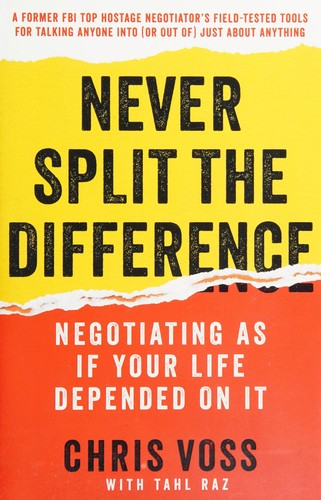
4. Never Split the Difference — Chris Voss
MBA discipline: Negotiation
Written by a former FBI hostage negotiator, this book replaces the classic "find the middle ground" negotiation advice with something sharper: tactical empathy, calibrated questions, and the discipline to listen more than you talk.
It maps directly onto the negotiation simulations that show up commonly in MBA programs.
VIT's MBA curriculum includes negotiation within the Project Management specialisation, particularly in the Project Stakeholder Engagement and Communication unit.
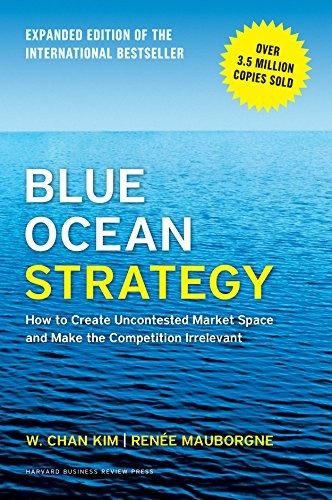
5. Blue Ocean Strategy — W. Chan Kim & Renée Mauborgne
MBA discipline: Marketing Strategy & Innovation
Instead of fighting competitors for a shrinking market ("red ocean" thinking), Kim and Mauborgne make the case for creating entirely new, uncontested market space.
This is the book that underpins most innovation and marketing-strategy modules.
The one that gets referenced whenever a case study asks "could this company have avoided the price war altogether?"
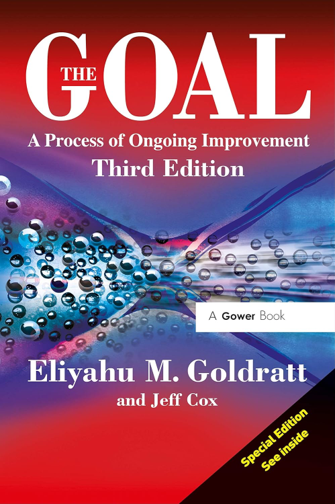
6. The Goal — Eliyahu M. Goldratt
MBA discipline: Operations Management
Written as a business novel rather than a textbook, The Goal follows a plant manager racing to save his factory, and along the way, teaches the Theory of Constraints, the idea that every system has one bottleneck worth obsessing over.
It's the book operations professors assign because it makes supply-chain thinking feel like a thriller instead of a spreadsheet.
7. Extreme Ownership — Jocko Willink & Leif Babin
MBA discipline: Navigating Challenges & Crisis Leadership
Written by two Navy SEAL officers, this book takes combat leadership lessons and translates them almost line-for-line into business situations. The core idea being that a leader owns every failure, with no excuses, and that clarity under pressure is a skill you can train.
It's the book for the parts of an MBA that deal with crisis management and leading through uncertainty.
Conclusion
Strategy, leadership, decision-making, negotiation, marketing, operations, and resilience under pressure — that's essentially the spine of any good MBA program, and each of these seven books hands you a working model for one of those disciplines.
Reading all seven won't replace the degree, but it will give you a genuine feel for how MBA graduates are trained to think, and might just help you decide whether that way of thinking is one you want to build a career on.
The Online MBA from Victorian Institute of Technology helps working professionals develop capabilities across areas such as strategy, leadership, decision-making and operations, without pausing their careers.


