


As digital economies reshape the way businesses operate, workplaces require new type of leaders and managers. Those who are agile, tech-savvy, and equipped to handle change.
A global online MBA is one of the most effective ways to develop these skills.
In this blog, we cover how an online MBA builds strong management skills, develops digital leadership capabilities, and prepares you for future technological change.
Why Today’s Digital Economy Needs a New Kind of Leader
The business landscape is changing faster than most leaders anticipated. The rise of artificial intelligence, cloud-based operations, remote workforces, and data-driven decision-making has fundamentally shifted what organisations expect from their managers and executives.
According to Deloitte’s 2025 Global Human Capital Trends report, organisations increasingly recognise the need for leaders who can bridge growing experience gaps and reinvent managerial roles in a world reshaped by AI and evolving workforce expectations.
This is precisely the gap a global online MBAis designed to close.
At the Victorian Institute of Technology (VIT), the Master of Business Administration has been purpose-built to develop exactly this kind of leader. One who brings together strategic thinking, technological fluency, and the interpersonal skills needed to inspire teams and drive results.
Understanding why an online MBA is so relevant today requires looking at three interconnected forces shaping medium and large businesses: digital transformation, globalisation, and the demand for agile, evidence-based leadership.
These forces operate in tangent with one another, and they require a calibre of professional development that goes well beyond single-discipline qualifications.
How MBA Builds Strong Management Skills
One of the most enduring myths about MBAs is that they are primarily for people who want to climb the corporate ladder in large organisations.
In reality, the core management skills developed through an MBA apply universally.
VIT's MBA curriculum covers the fundamentals that every effective manager needs, i.e. strategic marketing, business finance, logistics and supply chain management, human resources, and organisational behaviour.
What makes strong management skills so crucial in the digital era is the sheer volume and complexity of decisions managers must make.
- Business Finance skills help you evaluate investments and manage risks with confidence.
- Strategic Decision-Making draws on psychology, sociology, and management science to help you move beyond gut instinct and toward structured analytical reasoning.
- Logistics and Supply Chain Management is becoming increasingly relevant as businesses grapple with post-pandemic supply disruptions.
Strong management is only the starting point though.
Students can choose a pathway that sharpens their expertise and aligns with global demand.
Why MBA Specialisation Matters in the Digital Economy
As industries become more data-driven and globally connected, the demand for focused expertise continues to rise.
AT VIT Australia, we offer 3 high-demand MBA specialisations employers value.
1. Project Management Specialisation
This specialisation is built for professionals who want to lead complex initiatives.
Students study:
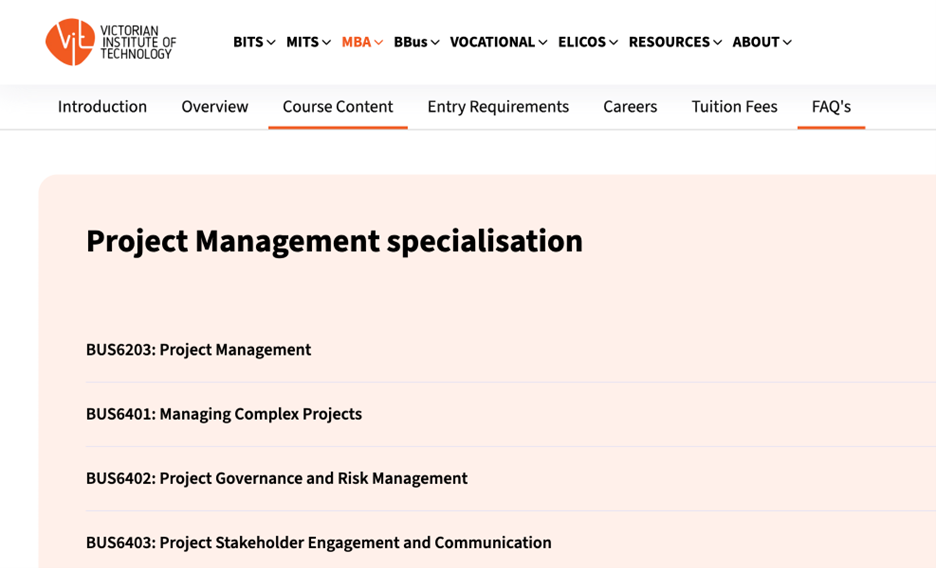
In project management, students learn how to handle uncertainty, control risk, align teams, and deliver under pressure.
Organisations worldwide will need millions of new project professionals annually just to keep up with growth.
2. Leadership and Management Specialisation
This pathway focuses on managing human resources to scale organisational impact.
Leadership challenges organisations are facing today are vastly different from those of even a decade ago.
Managing hybrid and remote teams, leading through rapid technological change in wake of the AI boom, maintaining psychological safety while driving performance, and handling culturally diverse workforces across global supply chains are some of the main challenges managers are facing.
In VIT’s Leadership and Management specialisation, students cover:
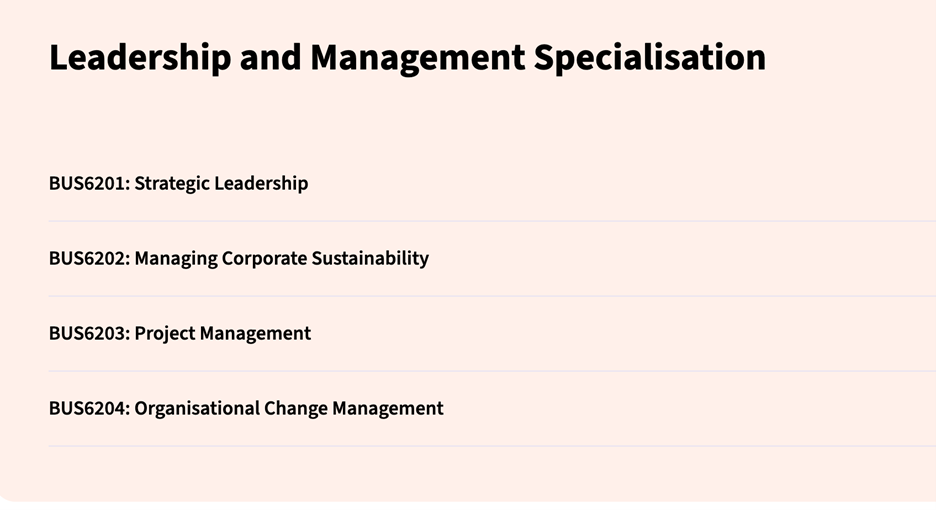
Strong leadership is a top priority for companies everywhere.
Recruiters consistently name leadership and interpersonal skills as the most important capabilities they seek in business graduates.
Finance professionals manage capital structure, and handle financial accounting of the company, directly influencing corporate growth.
This specialisation covers:
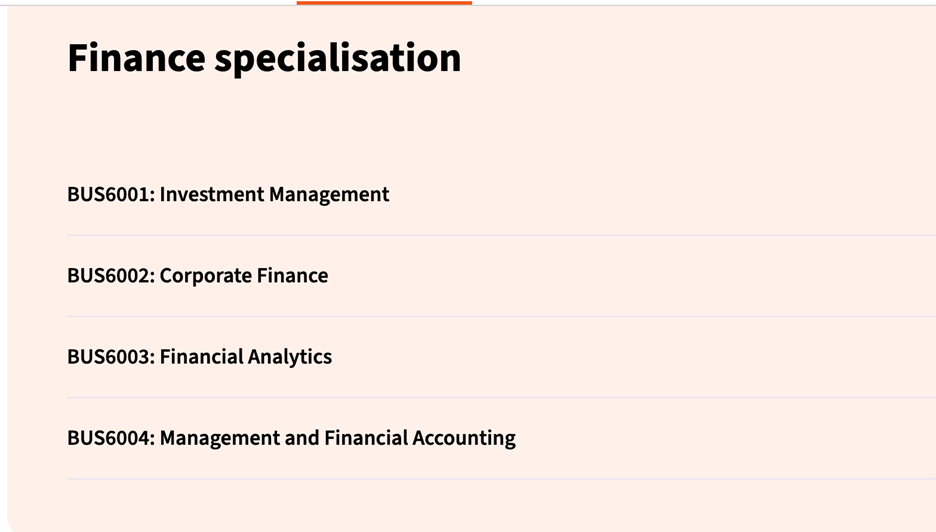
MBA specialisations in finance continue to be among the most widely sought after by global employers.
Digital Leadership as a Core Competency
Being a digital leader doesn't mean you need to be a software engineer or a data scientist. It means you need to understand the strategic implications of digital technology well enough to make sound decisions about it.
Units such as Strategy and Innovation in our MBA course equip you to evaluate technology investments critically, manage knowledge assets, and apply agile principles to drive innovation within your organisation.
Digital leadership as a competency requires more than technical awareness.
It requires:
- Asking the right questions to technology vendors and internal IT teams.
- Translating digital strategy into human terms for your workforce.
- Measuring digital initiatives against clear business outcomes.
MBA graduates who combine management depth with digital leadership capability are precisely the professionals that organisations, from government agencies and health systems to fintechs and agri-tech companies, are seeking.
Career Impact in the Digital Age
The career data on MBA graduates is clear and consistent: the degree delivers a measurable return on investment, particularly in leadership, management consulting, and strategy-related roles.
According to a study published by Preply, which analysed the educational backgrounds of 1,000 CEOs listed by Forbes among the world’s largest companies, 22.3% hold an MBA.
VIT's MBA prepares graduates for roles including Business Development Manager, Management Consultant, Project Manager and more; positions that command competitive salaries and offer genuine scope for career advancement.
Conclusion
The digital economy needs leaders who combine strategic depth, digital fluency, strong people skills, and the intellectual courage to make good decisions in an uncertain world.
Whether you're looking to accelerate into a senior management role, transition into a new industry, or build the skills to launch and grow your own enterprise, VIT’s online MBA offers a structured, affordable, and genuinely rigorous pathway to getting there.
Explore VIT's online MBA and take the first step toward becoming the future-ready digital leader Australia's economy needs.
FAQs
An online MBA improves management skills by immersing you in a rigorous curriculum that covers the full breadth of business operations. From finance and marketing to human resources, supply chain, and strategic decision-making.
At VIT, the MBA is built around applied learning, meaning you're not just studying theory in isolation. You're applying frameworks directly to real workplace challenges through case studies, projects, and industry-integrated assessments. Over two years, you build a systematic toolkit for managing people, resources, and complexity more effectively than most professionals could develop through work experience alone.
Traditional leadership focused primarily on managing people, processes, and resources within relatively stable environments. Digital leadership involves all of that, plus the ability to understand the strategic implications of technology, lead teams through rapid digital transformation, make data-informed decisions, and build organisational cultures that can adapt continuously to technological change.
Digital leaders need to be comfortable with ambiguity, fluent enough in technology to make sound decisions about it (without necessarily being technical experts), and skilled at translating digital strategy into human action across their organisations.
Yes, particularly when it comes from an accredited institution. VIT's MBA is accredited by the Tertiary Education Quality and Standards Agency (TEQSA) and is recognised by the Australian Government. An online MBA from a reputable provider carries the same academic standing as an on-campus degree and is listed on the Australian Qualifications Framework (AQF) at Level 9.
Globally, employers across every major sector recognise the MBA as a strong signal of business capability, commitment to professional development, and readiness for senior leadership responsibilities.
Sectors that currently show particularly strong demand for MBA graduates include technology and digital services, financial services and fintech, healthcare and health administration, infrastructure and project management, and professional services (consulting, legal, and accounting).
The generalist-plus-specialist nature of the MBA means graduates can move across sectors more fluidly than those with narrowly focused qualifications.
This serves as a significant advantage in an economy where career transitions are increasingly common.
The MBA prepares leaders for technological change not by teaching specific tools (which quickly become outdated) but by building the analytical frameworks, critical thinking skills, and strategic mindset needed to evaluate and respond to new technologies as they emerge.
Absolutely and in fact, working professionals often get more out of an MBA than full-time students, because they can immediately connect what they're learning to real challenges in their current roles.
VIT's online MBA is specifically designed for professionals who are balancing work, family, and study. The flexible study load options mean you can adjust your pace each term to suit your professional commitments.
Students can also access the learning portal at any time, and the support team maintains regular contact with students throughout the program to ensure no one falls behind. Domestic and international online students have successfully completed the VIT MBA from locations across Australia and around the world while remaining in full-time employment.


