


Mid-career professionals often reach a moment when they ask themselves a difficult question: “Where do I go from here?”
You might already have a solid career, years of experience, and perhaps even a management role. Yet the workplace feels different today than it did even five years ago.
Technology, automation, and shifting business expectations are transforming how companies operate. Roles that once seemed stable are evolving rapidly, and employers increasingly want professionals who bring both strategic thinking and specialised expertise.
Organisations are dealing with a widening skills gap. Deloitte’s Global Human Capital Trends research reveals that 66% of managers believe new hires are not fully prepared for their roles. This highlights the growing mismatch between workplace demands and workforce skills. This reality creates a powerful opportunity for professionals who invest in targeted development.
That’s where an Online MBA Specialisation becomes incredibly valuable. Instead of pursuing a broad business degree alone, professionals can align their MBA with a specific area of expertise, making their profile far more compelling to employers.
How AI and Changing Work Expectations Are Reshaping Careers
If you look closely at today’s workplace, you’ll notice something fascinating: the definition of valuable work is shifting.
Tasks that once required years of experience can now be automated by software or assisted by artificial intelligence. Meanwhile, the skills that remain uniquely human, i.e. decision-making, leadership, and complex problem-solving are becoming even more important.
Anthropic has introduced new plugins for Claude, allowing the AI to connect directly with workplace tools like spreadsheets, documents, and project platforms. This means it can now analyse data, summarise reports, generate presentations, and automate multi-step workflows; tasks traditionally handled by knowledge workers.
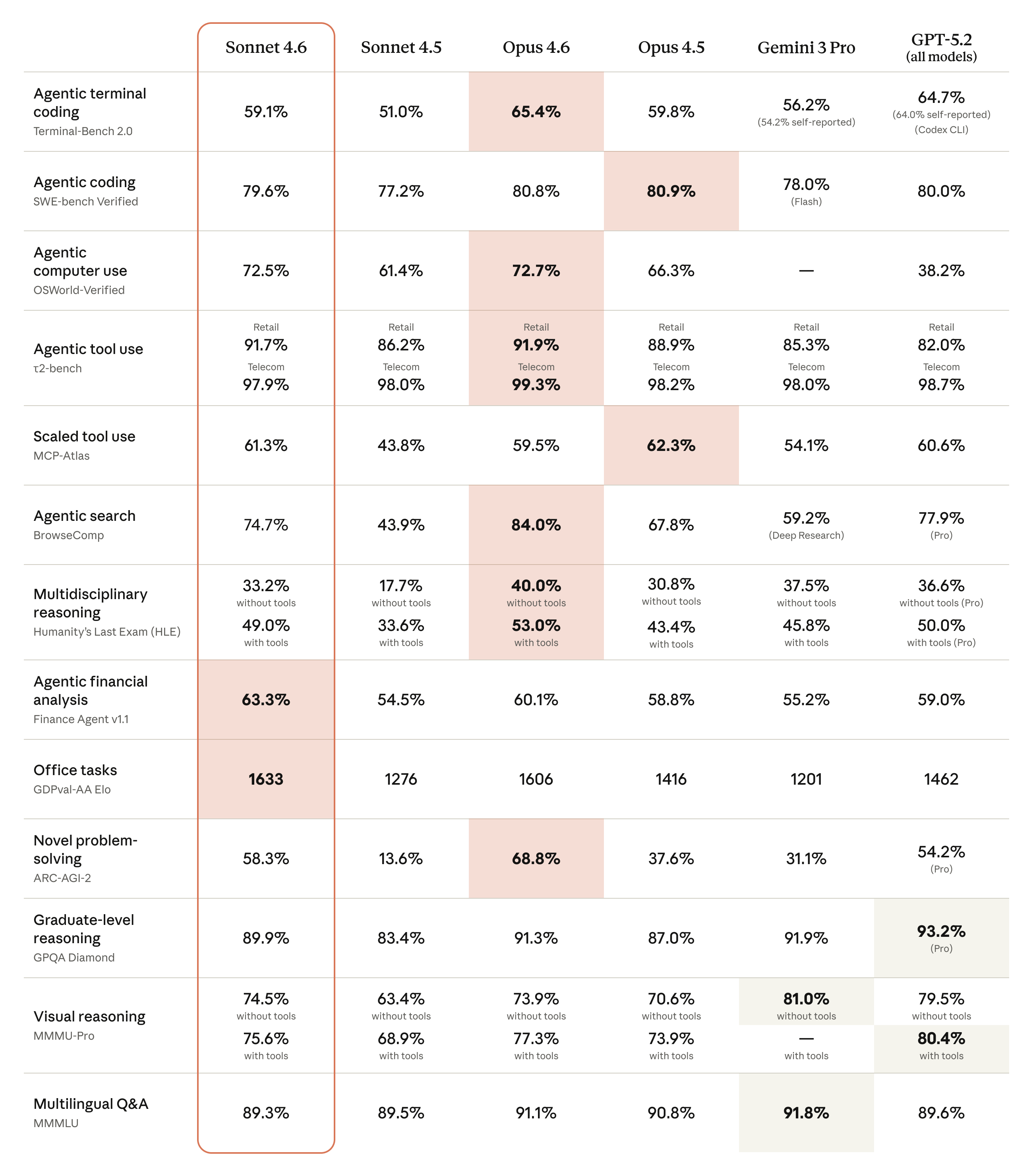
(source: https://www.anthropic.com/news/claude-sonnet-4-6)
As AI begins to take over routine analytical and administrative work, technology is rapidly reshaping productivity and output expectations. The real differentiator for professionals will no longer be simply doing tasks but bringing specialised expertise and strategic insight that AI alone cannot replicate.
In an AI-augmented workplace, specialisation is becoming the key to staying relevant.
This transformation has direct impact on career growth. Companies no longer want employees who simply follow processes.
They want professionals who can lead change, interpret data, manage projects, and translate strategy into results.
These capabilities are not always developed through on-the-job learning alone. Structured education, especially at the postgraduate level, often becomes the fastest route to gaining them.
The problem is that traditional upskilling models haven’t kept pace with the speed of change.
Many professionals still rely on short courses or informal training, but these rarely provide the depth needed to transition into higher-impact roles.
An Online MBA for working professionals, especially one with a specialisation, truly prepares you for senior positions.
Why Choosing an Online MBA Specialisation Matters
A general MBA typically covers a wide range of business topics, i.e. marketing, operations, finance, leadership, and strategy. This is useful for building foundational knowledge. However, many professionals already have some exposure to these concepts through work experience. What they often lack is a deeper skill set that directly supports career progression.
An MBA specialisation, on the other hand, takes the core business curriculum and layers it with focused learning in a specific field. Instead of simply understanding business broadly, you develop mastery in an area that employers actively seek.
Consider how recruiters evaluate candidates. In competitive markets, they scan profiles quickly. Titles like “MBA Project Management Specialisation” or “MBA Finance Specialisation” instantly communicate a professional focus.
This clarity makes it easier for hiring managers to match your capabilities to organisational needs.
Another benefit is relevance.
Specialised MBA programs often incorporate industry case studies, real-world projects, and applied learning experiences tailored to specific roles. For example, at Victorian Institute of Technology, we offer capstone projects that enable students to apply their learning to real world problems.
Leadership & Management MBA Specialisation
Who Should Choose a Leadership & Management MBA Specialisation
Leadership is one of those concepts everyone talks about but few truly master. Many professionals become managers simply because they were good at their previous roles. Suddenly they find themselves responsible for teams, performance targets, and organisational strategies without having received formal leadership training.
A Leadership & Management MBA Specialisation addresses this gap directly.
It is particularly valuable for professionals transitioning from technical roles into managerial or executive positions. Think about engineers moving into operations leadership, marketing professionals becoming heads of departments, or consultants stepping into strategy roles.
The modern workplace requires leaders who can balance productivity with people development.
Deloitte research highlights that many organisations recognise the need to reinvent the role of the manager, yet only a small percentage report significant progress in doing so. This indicates a major opportunity for professionals who intentionally develop leadership capabilities.
Leadership & management specialisations focus on the human side of organisations: motivating teams, managing change, and aligning business goals with organisational culture. These skills are increasingly critical in an era where hybrid work, digital transformation, and cross-functional collaboration define the workplace.
Key Skills Developed in Leadership Programs
Core learning areas often include change leadership, organisational strategy, stakeholder communication, people development and ethical decision-making.
Career Roles After a Leadership MBA
Common career outcomes include:
| Role | Focus Area |
|---|---|
| Operations Manager | Overseeing business processes and performance |
| General Manager | Leading business units or divisions |
| Strategy Manager | Developing organisational growth strategies |
| Business Development Manager | Driving partnerships and revenue growth |
Project Management MBA Specialisation
Who Benefits Most from Project Management Specialisation
An MBA project management specialisation is ideal for individuals who already work in project-driven environments and want to elevate their delivery capabilities. Industries such as technology, construction, healthcare, finance, and government all depend heavily on structured project management.
Professionals in these fields often face similar challenges: tight deadlines, limited budgets, and multiple stakeholders with competing priorities. Without formal training, managing these complexities can be overwhelming.
Project management education introduces frameworks that bring order to chaos. Instead of reacting to problems as they arise, professionals learn systematic approaches for planning, execution, risk management, and performance monitoring.
Key Competencies Developed in Project Management MBA
project management MBA specialisation focuses heavily on structured delivery frameworks, agile methodologies, ability to and stakeholder communication.
Career Opportunities in Project-Driven Industries
Common roles after a project management MBA include:
| Role | Primary Responsibility |
|---|---|
| Project Manager | Technology, construction, healthcare |
| Program Manager | Large-scale organisational initiatives |
| PMO Lead | Portfolio management and governance |
| Delivery Manager | Agile and digital transformation projects |
Finance MBA Specialisation
Who Should Consider an MBA Finance Specialisation
An MBA finance specialisation is particularly valuable for professionals who want to influence business strategy through financial insight.
This pathway is well suited for accountants, analysts, consultants, and managers involved in budgeting or performance evaluation.
Finance professionals increasingly act as strategic partners within organisations. Instead of simply reporting numbers, they interpret financial data and advise leadership on investment decisions.
Core Skills Developed in Finance MBA Programs
Finance specialisations typically cover advanced topics such as financial modelling, capital budgeting, risk management, and corporate valuation..
Career Paths in Corporate and Strategic Finance
After a MBA finance specialisation, common career prospects include:
| Role | Industry Applications |
|---|---|
| Finance Manager | Overseeing financial planning and reporting |
| Financial Controller | Managing accounting operations |
| FP&A Manager | Strategic financial planning and analysis |
| Corporate Finance Manager | Investment and capital allocation decisions |
Conclusion
Choosing the right Online MBA Specialisation depends on your career goals.
- Leadership & Management: Best if you want to lead teams and drive strategy.
- Project Management: Ideal if your role focuses on delivering projects and managing initiatives.
- Finance: Suitable if you want to work with financial strategy, analysis, and business decisions.
Choose the path that best supports your next career move.
FAQs
The best specialisation depends on your career goals. Leadership is ideal for management roles, project management suits delivery-focused professionals, and finance is best for strategic decision-making roles.
Yes. Employers increasingly recognise online MBA degrees as equivalent to on-campus programs.
Absolutely. Victorian Institute of Technology’s Online MBA program has been specifically designed for professionals who want to maintain their jobs while pursuing higher education. It is 100% asynchronous and flexible, supporting you to learn at your own pace.
Leadership, project management, and finance consistently rank among the most in-demand MBA specialisations because they address core organisational needs.


